

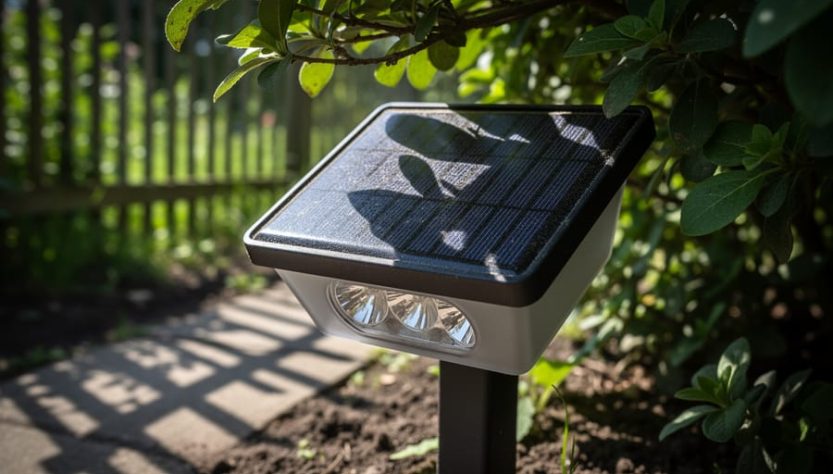
The most common environmental factor behind solar light failure is chronic shading from vegetation growth, which cuts photovoltaic output by 50 to 90 percent within a single growing season. Before assuming a broader environmental problem, inspect the panel surface for dirt accumulation and check whether nearby plants, structures, or seasonal foliage now block direct sunlight during peak hours (typically 10 a.m. to 2 p.m.). A quick wipe-down and branch trimming often restores full function within 24 hours as the battery recharges.
Beyond these immediate fixes, solar lighting systems face genuine environmental challenges across their lifecycle. Temperature extremes degrade battery chemistry faster than manufacturers advertise, UV exposure yellows plastic housings and reduces light transmission, and moisture intrusion corrodes contacts even in supposedly weatherproof units. Manufacturing the photovoltaic cells, batteries, and LED components also carries an environmental cost through mining rare metals, energy-intensive fabrication, and disposal hazards when systems reach end-of-life after five to fifteen years.
This troubleshooting guide addresses both dimensions. You’ll find diagnostic steps to identify whether weather, pollution, or biological factors are sabotaging your current installation, plus detailed repair protocols for the most frequent environmental failures. The second half examines the larger sustainability profile of solar lighting technology in 2026, including recent advances in recyclable materials and comparative lifecycle assessments against grid-powered alternatives. Whether you’re diagnosing a flickering pathway light or evaluating solar deployment for a municipal project, understanding these environmental interactions ensures realistic expectations and smarter maintenance planning.
Identifying the Problem: When Solar Lights Underperform
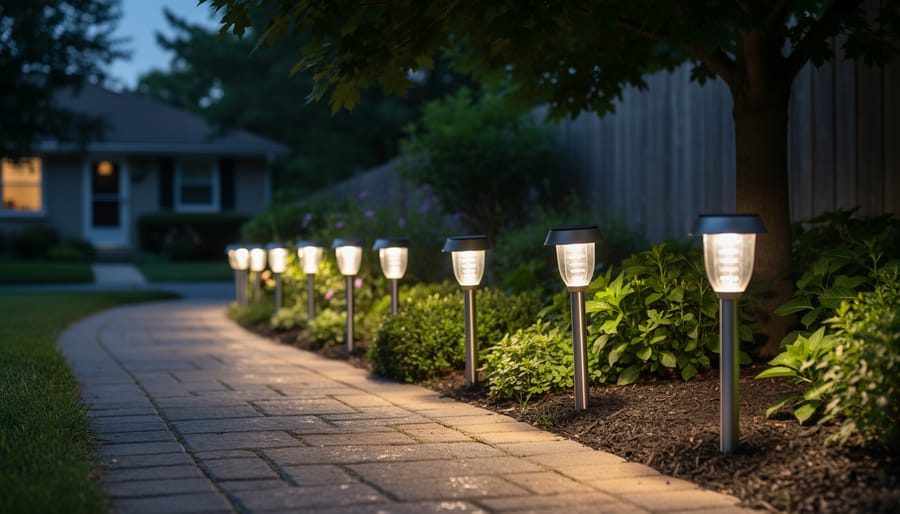
Solar lights fail in predictable patterns, and recognising these symptoms points directly to the underlying environmental stressor. Most performance issues show up gradually rather than all at once, which means you can often catch and fix problems before they become permanent.
Dim output is typically the first warning sign. When your solar lights produce noticeably less brightness than when new, even after a full sunny day, the panels aren’t converting enough sunlight into stored energy. This points to either surface contamination blocking light absorption or battery degradation reducing storage capacity.
Shortened runtime follows a similar logic. If lights that once stayed illuminated for eight hours now fade after three or four, the battery isn’t holding a full charge. Temperature extremes accelerate this decline, particularly the freeze-thaw cycles of winter and the sustained heat of summer installations.
Intermittent operation creates frustration because the lights work sometimes but not others. This inconsistency usually stems from marginal sun exposure combined with variable weather. On clear days, the system scrapes together enough charge to function; cloudy stretches leave it depleted. Corrosion on electrical contacts produces similar on-and-off behaviour as oxide buildup intermittently breaks the circuit.
Complete failure means no light output at all despite adequate charging time. Before assuming the fixture is dead, consider whether environmental factors have created a total blockage. Heavy soiling, snow accumulation, or moisture intrusion can render an otherwise functional unit inoperative.
- Dim, weak light: Panel soiling, battery degradation, or insufficient sun exposure
- Shortened runtime: Temperature-related battery capacity loss or reduced daily charging
- Intermittent operation: Variable weather patterns, marginal sun access, or corroded connections
- Complete failure: Severe soiling, moisture damage, frozen batteries, or total shade
- Delayed activation: Dirty light sensors, corrosion on sensor contacts, or calibration drift
Delayed activation at dusk deserves mention as well. When lights don’t switch on until well after dark, the photosensor that detects nightfall is likely contaminated with dust or moisture. This same sensor malfunction can cause lights to shut off prematurely at dawn, further reducing useful operation.
The key to effective diagnosis is observation over several days. A single poor night might reflect temporary cloud cover, but a consistent pattern indicates an environmental issue requiring intervention.
Root Environmental Causes Behind Solar Light Failure
Insufficient Solar Irradiance and Geographic Limitations
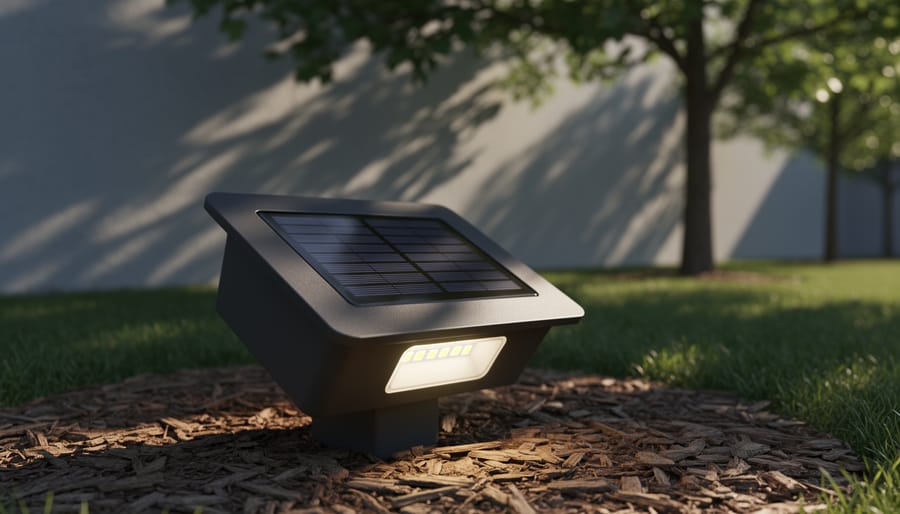
Solar panels require direct sunlight to generate electricity, yet many installations receive far less solar energy than their rated specifications assume. Standard photovoltaic efficiency ratings reflect performance under 1,000 watts per square meter of irradiance, a benchmark that represents full, unobstructed midday sun. In practice, geographic location and environmental conditions frequently deliver much less.
Latitude determines the angle at which sunlight reaches Earth’s surface and the duration of daylight hours. Locations above 50 degrees north or south latitude experience dramatically reduced winter sun angles, cutting available solar energy by 60-70% compared to summer peaks. A solar light that charges fully in July may receive only three hours of effective sunlight in December at these latitudes, leaving batteries chronically undercharged.
Seasonal cloud cover compounds this issue. Regions with prolonged overcast periods, Pacific Northwest maritime climates, monsoon zones, or high-latitude winters, see diffuse rather than direct radiation. Photovoltaic cells convert diffuse light at roughly 10-25% of their direct-sun efficiency, meaning cloudy days contribute minimal charge despite appearing moderately bright to human eyes.
Shading creates localized solar deserts even in sunny climates. Trees, buildings, fences, and roof overhangs cast shadows that shift throughout the day and across seasons. A location receiving six hours of summer sun may drop to two hours in winter as the sun’s path lowers. Partial shading affects disproportionately: covering just 10% of a panel surface can reduce total output by 50% or more due to how cells connect in series.
Urban environments intensify these challenges. Tall structures create canyon effects, pollutants scatter incoming light, and reflected heat from pavement paradoxically reduces panel efficiency while simultaneously degrading battery performance.
Temperature Extremes and Battery Degradation
Battery performance degrades rapidly when solar lights operate outside their design temperature range. Nickel-metal hydride (NiMH) batteries, the most common type in solar lights, lose roughly 20% of their capacity for every 10°C drop below freezing. At -20°C, a fully charged battery may deliver only 40% of its rated output, causing lights to dim within an hour instead of lasting through the night. High temperatures inflict different damage. Above 40°C, accelerated chemical reactions inside battery cells increase self-discharge rates and permanently reduce the number of charge-discharge cycles the battery can complete before failure.
These temperature effects create a troubling paradox: solar lights often fail precisely where they’re most needed. Remote northern communities, desert installations, and off-grid locations in extreme climates rely on solar technology because extending electrical infrastructure is prohibitively expensive. Yet these same environments subject batteries to temperature swings that can halve operational lifespan within two years. Heat also warps plastic housings and degrades LED phosphor coatings, while repeated freeze-thaw cycles crack sealants and allow moisture intrusion. The result is a compound failure where environmental stress damages multiple components simultaneously, not just the battery.
Moisture, Humidity, and Corrosion
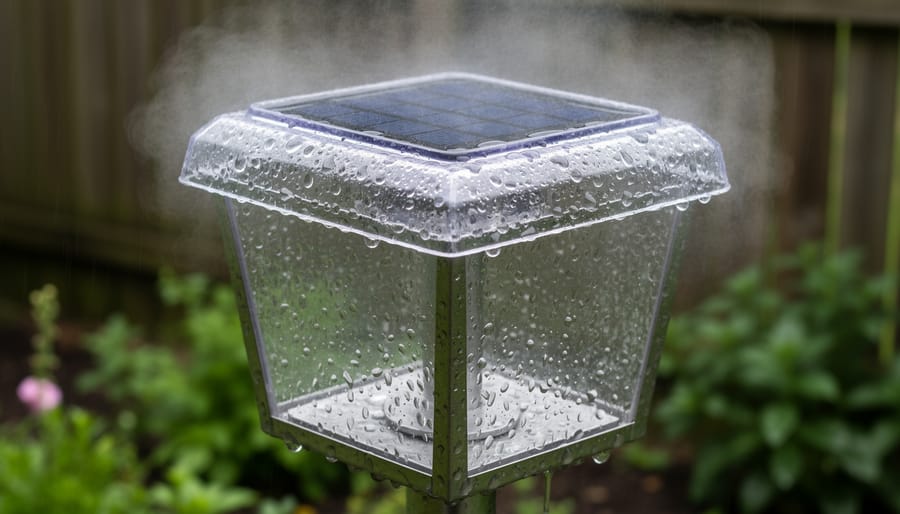
Moisture infiltration ranks among the most destructive environmental threats to solar light longevity. Even lights marketed with high IP ratings eventually develop seal failures, allowing water vapour to penetrate fixture housings. Once inside, condensation forms on internal surfaces during temperature swings, particularly at night when components cool rapidly. This moisture creates a thin conductive film across circuit boards and terminals, enabling current leakage that drains batteries and trips protection circuits.
Corrosion follows quickly. Electrical contacts oxidize, increasing resistance and generating heat that accelerates further degradation. Solder joints develop green copper carbonate blooms, weakening connections until they fail intermittently or completely. Circuit boards themselves corrode along copper traces, severing paths between components. In coastal environments with salt-laden air, this process intensifies, sodium chloride acts as a catalyst, attacking aluminium heat sinks and steel mounting hardware alongside electrical components.
Solar panels suffer distinctly from moisture. Water infiltration between the photovoltaic cell and protective glazing creates optical losses as droplets scatter incoming light. Persistent condensation fogging the panel surface reduces transmission similarly to how soiling impacts PV performance blocking photons from reaching the semiconductor layer. Ambient sensors that control light-on timing also fog over, causing lights to operate erratically or remain dim during actual darkness. Combined, these moisture-driven failures explain why solar lights frequently underperform in humid climates despite receiving adequate sunlight.
Dust, Pollution, and Panel Soiling
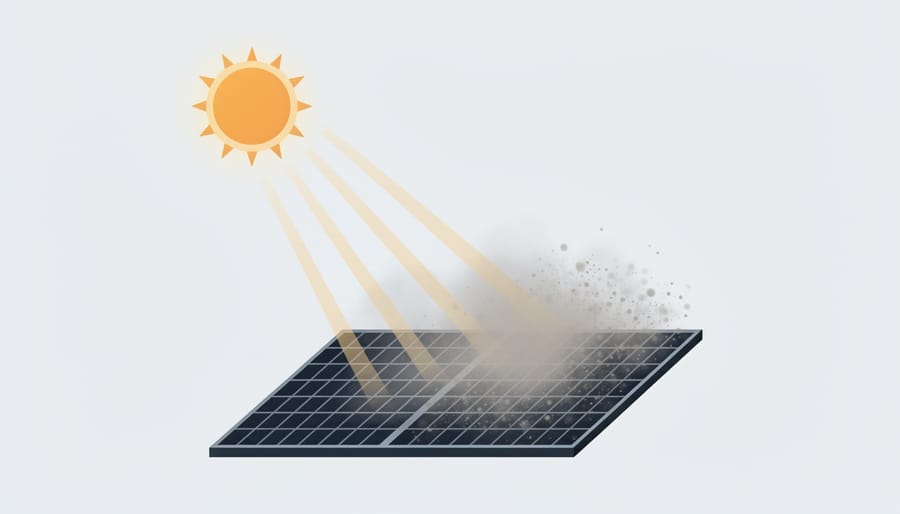
Dust, pollen, bird droppings, industrial emissions, and agricultural particulates settle on solar panel surfaces, forming a film that scatters and absorbs incoming light before it reaches the photovoltaic cells. Even a thin layer reduces charging efficiency, and in environments with heavy dust or pollution, accumulation can cut output by half within weeks. Unlike rainfall’s temporary cleaning effect, sticky contaminants like tree sap or diesel exhaust residue bond to the panel, requiring manual removal.
The severity of panel soiling depends heavily on local conditions. Soiling losses vary by region with desert installations, agricultural areas during harvest, and industrial zones experiencing the fastest degradation. Coastal locations face salt spray accumulation, while urban environments contend with vehicle emissions and construction dust. Regions with infrequent rainfall compound the problem, as natural cleaning cycles vanish.
This creates a maintenance paradox: solar lights deployed in remote or off-grid locations, where their benefits are greatest, often sit in dusty, harsh environments that demand regular cleaning. Users must either accept reduced performance or commit to cleaning panels every few weeks. For large installations, this maintenance burden translates to labor costs and water consumption, eroding the low-maintenance promise of solar technology.
How to Fix and Restore Solar Light Performance
Cleaning and Panel Maintenance
Regular maintenance keeps solar lights operating at peak efficiency, and cleaning requires minimal tools but careful technique to avoid damaging sensitive components.
Start by disconnecting the solar light or switching it off if possible. For integrated units, remove the fixture from its stake or mounting bracket. Gather a soft microfiber cloth, lukewarm water, mild dish soap, and isopropyl alcohol (70% or higher) for electrical contacts.
- Gently wipe the solar panel surface with a damp microfiber cloth to remove loose dust and pollen. For stubborn grime, add one drop of dish soap to the water, then rinse thoroughly with clean water and dry completely.
- Inspect battery contacts and circuit board connections for white or green corrosion. Dip a cotton swab in isopropyl alcohol and scrub corroded areas until the metal shows clean and bright, allowing it to air-dry fully before reassembly.
- Clear any debris from light sensors using compressed air or a dry soft brush. Check drainage vents and gasket channels, removing accumulated dirt that could trap moisture and compromise seals.
- Examine the transparent cover or lens for cloudiness. If cleaning the exterior doesn’t restore clarity, interior condensation may require opening the fixture to wipe both surfaces and check seal integrity.
Perform this maintenance monthly in dusty or high-pollen environments, quarterly in moderate conditions. Always clean panels in early morning or evening when the surface is cool, cleaning hot panels can cause thermal stress cracks. After cleaning, monitor charging performance for two sunny days to confirm restoration of full output.
Optimizing Placement and Sun Exposure
Relocate fixtures to areas receiving at least six hours of unobstructed sunlight during peak daylight hours, typically between 10 AM and 4 PM. Avoid north-facing walls in the Northern Hemisphere where panels receive minimal direct radiation even in summer.
Measure actual sun exposure at your installation site by placing a sun chart tracker or using smartphone apps that map solar paths throughout the day. Mark locations where shadows from buildings, fences, or trees fall at different times. Many users overestimate available sunlight because they assess sites only at midday, missing morning or afternoon shade patterns.
Trim overhanging branches and vegetation within a three-foot radius of each fixture. Even partial shading across just 10% of a solar panel can reduce charging efficiency by 50% due to how photovoltaic cells connect in series. Schedule pruning twice yearly before summer and winter solstices when sun angles change most dramatically.
For lights that can’t be moved, consider installing panel extension cables to position the photovoltaic element in full sun while keeping the fixture itself in a shaded decorative location. This separation solves aesthetic constraints that often force poor placement decisions.
Battery Replacement and Upgrade Options
Begin by removing the solar light’s battery compartment cover and inspecting the cells for swelling, leakage, or white corrosion deposits, all signs of degradation requiring immediate replacement. Test voltage with a multimeter; NiMH cells reading below 1.0V per cell have lost capacity and won’t hold adequate charge.
For cold climates where temperatures drop below -10°C, replace standard NiMH batteries with low-temperature variants rated to -20°C or colder. These specialized cells maintain charge acceptance when conventional batteries fail. In hot regions exceeding 40°C regularly, lithium iron phosphate (LiFePO4) batteries tolerate heat better than NiMH and deliver 2-3 times the cycle life, though they cost more upfront.
Calculate your upgrade economics: if battery replacements are needed every 12-18 months, switching to lithium alternatives paying for themselves within three years makes financial sense. Lithium upgrades also reduce environmental waste by lasting 5-7 years versus 1-2 for budget NiMH cells. Advances in energy storage technology continue improving temperature tolerance and lifespan.
Match replacement capacity (mAh rating) to your original specification or slightly higher, never lower, as undersized batteries won’t support full-night operation.
Weatherproofing and Seal Restoration
Moisture intrusion destroys solar lights from the inside out, but most housings can be restored with basic weatherproofing repairs. Start by disassembling the fixture and inspecting all seals and gaskets for compression set, cracks, or brittleness. Replace O-rings and rubber gaskets with silicone alternatives rated for outdoor UV exposure, they outlast standard rubber by years. Clean mating surfaces thoroughly with isopropyl alcohol before installing new seals to ensure proper compression.
For cracked housings or compromised seams, apply marine-grade silicone sealant sparingly along joints, wiping excess immediately to maintain drainage paths. In coastal or tropical climates where humidity penetrates even intact seals, brush a thin layer of conformal coating onto exposed circuit boards and solder joints. This transparent acrylic or silicone layer prevents corrosion without affecting electrical function. Allow 24 hours curing time before reassembly, and test the seal by submerging the housing (battery removed) in water for ten minutes, checking for bubbles that indicate leak points requiring additional sealant.
Prevention: Designing Solar Systems for Environmental Resilience
Matching Technology to Climate
Selecting solar lights that match your climate prevents the majority of environmental performance failures. Start by checking the manufacturer’s operating temperature range, quality fixtures specify both storage and operational limits. For hot climates exceeding 40°C (104°F) regularly, choose models with lithium iron phosphate (LiFePO4) batteries rather than standard nickel-metal hydride, as they tolerate heat without rapid capacity loss. In regions with winter temperatures below -20°C (-4°F), look for fixtures rated for extreme cold and consider lithium-ion chemistry, which maintains charge acceptance in freezing conditions.
Weatherproofing matters more than marketing claims suggest. An IP65 rating provides adequate dust and water resistance for most temperate zones, but coastal areas with salt spray demand IP67 or higher, with corrosion-resistant housings made from marine-grade materials rather than standard plastics. Avoid common LED lighting pitfalls by verifying that the LED driver circuit includes thermal management suitable for your peak temperatures, inadequate heat dissipation causes premature LED failure in consistently hot environments. For high-humidity regions, choose fixtures with breather vents that equalize pressure while blocking moisture ingress, preventing the condensation that corrodes internal electronics.
Establishing a Maintenance Schedule
Regular maintenance extends solar light lifespan and prevents minor environmental degradation from escalating into complete failure. Base your schedule on local conditions rather than generic manufacturer recommendations.
In dusty or coastal environments, clean panels monthly using a soft cloth and plain water, never abrasive cleaners that scratch the photovoltaic surface. Inland temperate zones can extend this to quarterly cleaning. Inspect seals and gaskets every six months, replacing any showing cracks or brittleness before moisture penetrates housings.
Battery performance testing should occur annually. Use a multimeter to measure voltage after a full sunny day; readings below 80% of the rated capacity signal impending failure. Replace batteries preemptively rather than waiting for complete degradation, particularly before extreme seasonal weather arrives.
Document each maintenance session with photos and notes. Patterns like accelerated soiling on specific fixtures indicate microclimate issues requiring installation adjustments. Consistent tracking transforms reactive repairs into predictive maintenance, dramatically reducing long-term costs and environmental waste from premature component replacement.
Site Assessment Before Installation
Conduct a thorough site evaluation before installing solar lights to avoid performance problems. Start with a solar access analysis: observe the proposed location throughout the day, noting shade patterns cast by buildings, fences, trees, and seasonal foliage. Use a solar pathfinder or smartphone app to measure actual sun hours, aim for a minimum of six hours of direct exposure during the shortest days of the year.
Assess microclimate factors that accelerate degradation. Low-lying areas trap moisture and cold air, while south-facing walls create heat pockets. Note prevailing wind direction and proximity to salt air, industrial emissions, or agricultural dust sources that increase soiling rates.
Evaluate infrastructure requirements. Ensure mounting surfaces can support fixture weight and wind loads. Check that ground stakes can penetrate soil adequately. Identify safe electrical pathways if combining solar and grid systems. Map drainage patterns to avoid standing water around fixtures.
Document your findings with photos and measurements. This baseline data helps you select appropriate fixtures, anticipate maintenance needs, and diagnose future issues quickly.
The Broader Environmental Footprint of Solar Lighting
Solar lighting displaces fossil-fuel consumption, but the technology carries its own environmental burden from factory to landfill. Manufacturing photovoltaic cells requires energy-intensive processes and materials extraction, particularly silicon purification for crystalline panels and rare-earth elements for LEDs. Chinese factories, which produce roughly 80% of global solar components, historically relied on coal-powered grids during production, embedding carbon debt into each unit before it ever generates clean energy.
Battery chemistry presents the most significant concern. Nickel-metal hydride and lithium-ion cells require mining operations that disrupt ecosystems, consume water, and generate toxic waste. Cobalt extraction in particular raises both environmental and ethical questions, though many manufacturers now source from certified suppliers. The energy payback period, the time required for a solar light to offset the emissions from its production, ranges from six months to two years depending on manufacturing location, component quality, and replacement grid energy source.
End-of-life disposal compounds these concerns. Circuit boards contain lead solder, plastics rarely enter recycling streams, and batteries demand specialized processing to recover materials safely. Most residential solar lights end up in landfills where heavy metals can leach into soil. Commercial-grade systems with replaceable components fare better, but the consumer market floods waste streams with integrated units designed for disposal rather than repair.
Yet the carbon calculus still favors solar lighting in most applications. A solar pathway light replacing a 5-watt incandescent fixture on a coal-heavy grid prevents roughly 12-18 kg of CO₂ annually, offsetting its embodied emissions within the first operating year. The advantage grows in off-grid contexts where solar displaces diesel generators or kerosene lamps, eliminating both carbon emissions and local air pollution. Industry sustainability efforts now focus on extending product lifespan through modular design, establishing take-back programs, and shifting production to renewable-powered facilities, improvements that push the environmental balance decisively in solar’s favor for lighting applications.
Understanding Key Terms
Understanding the technical language around solar lighting helps you make informed decisions about troubleshooting, maintenance, and system selection. The following terms appear throughout discussions of solar light performance and environmental challenges.
- Solar Irradiance
- The power per unit area received from the sun, measured in watts per square meter. This value determines how much energy a solar panel can capture and varies by location, season, time of day, and weather conditions.
- Battery Cycle Life
- The number of complete charge-discharge cycles a battery can undergo before its capacity drops below 80 percent of its original rating. Environmental factors like temperature extremes and humidity significantly reduce cycle life in solar applications.
- IP Rating
- The Ingress Protection rating indicates how well a fixture resists dust and water penetration, expressed as two digits (such as IP65). The first digit rates solid particle protection (0-6 scale) while the second rates liquid protection (0-8 scale).
- Photovoltaic Efficiency
- The percentage of sunlight energy that a solar panel converts into usable electrical energy. Most residential solar lights use panels with 15-20 percent efficiency, though environmental factors like panel soiling and temperature can reduce actual conversion rates.
- Soiling Loss
- The reduction in solar panel output caused by accumulated dust, pollen, bird droppings, and other contaminants blocking sunlight. Soiling rates vary dramatically by region, with arid and high-pollution areas experiencing losses of 4-8 percent monthly without cleaning.
Grasping these concepts allows you to interpret product specifications accurately and understand why certain environmental conditions cause specific performance problems. When manufacturers rate a solar light for particular temperature ranges or claim certain runtime expectations, these terms form the foundation of those specifications. Recognizing the interplay between factors like soiling loss and photovoltaic efficiency, or between IP ratings and moisture-related failures, makes troubleshooting systematic rather than guesswork.
Common Questions About Solar Light Environmental Issues
Are solar lights suitable for cold climates with harsh winters?
Solar lights can function in cold climates, but performance drops significantly during winter months due to reduced daylight hours, low sun angles, and snow coverage on panels. Selecting models with lithium-ion batteries rated for sub-zero operation and installing panels at steep angles to shed snow improves winter reliability.
What’s the realistic lifespan of solar lights in different environments?
In temperate climates with moderate weather, quality solar lights typically last 3-5 years before requiring battery replacement and 5-8 years before fixture replacement becomes necessary. Harsh environments with extreme temperatures, high humidity, or heavy dust accumulation can reduce this lifespan by 30-50 percent, requiring more frequent component replacement.
When should I repair my solar lights versus replacing them entirely?
Repair makes economic and environmental sense when the fixture housing remains intact and only batteries or LEDs need replacement, typically costing 20-40 percent of new unit prices. Replace the entire unit when water damage has corroded circuit boards, the solar panel has delaminated, or multiple components have failed simultaneously, as repair costs often exceed replacement at that point.
Do solar lights remain environmentally beneficial despite their limitations?
Yes, solar lights still provide net environmental benefits in most applications by eliminating ongoing electricity consumption and grid infrastructure requirements. Even accounting for manufacturing impacts and shortened lifespans in challenging conditions, solar lights typically offset their embodied carbon within 2-4 years of operation compared to grid-powered alternatives.
How much maintenance do solar lights actually need?
At minimum, solar panels require quarterly cleaning in low-dust environments and monthly cleaning in arid or polluted regions. Annual inspection of seals, electrical connections, and battery condition prevents premature failure, with total maintenance time averaging 15-30 minutes per fixture annually for basic upkeep.
These questions reflect the practical concerns homeowners and facility managers encounter when weighing solar lighting against conventional options. The answers acknowledge real-world trade-offs while maintaining an evidence-based perspective on when solar technology makes sense despite environmental challenges. Understanding these limitations helps users make informed decisions aligned with both their operational needs and sustainability goals.
Solar lighting technology continues advancing alongside broader renewable breakthroughs with newer models incorporating improved battery chemistry, more durable weatherproofing, and higher-efficiency photovoltaic cells that address many historical performance issues. The key to successful solar light deployment remains matching specific products to local environmental conditions, establishing realistic performance expectations, and committing to the modest maintenance these systems require for long-term viability.
Solar lights represent a practical renewable energy technology that delivers measurable environmental benefits, but only when users understand and account for the environmental factors that affect their performance. The troubleshooting steps, prevention strategies, and design considerations outlined in this guide address the most common failure modes that frustrate homeowners and undermine confidence in solar technology.
Yes, solar lights will underperform in deeply shaded locations. Batteries will degrade faster in extreme temperatures. Panels require periodic cleaning in dusty environments. These aren’t flaws in the technology itself but rather predictable outcomes of deploying photovoltaic systems in varied real-world conditions. The key difference between successful solar adoption and abandoned fixtures lies not in avoiding environmental challenges but in choosing appropriate products, installing them correctly, and maintaining them according to local conditions.
When properly matched to their environment and given basic maintenance, quality solar lights can operate reliably for five to ten years while displacing electricity consumption and reducing carbon emissions. The manufacturing and disposal impacts, while real, remain significantly lower than the cumulative environmental cost of grid-powered alternatives over equivalent lifespans.
Making solar work means setting realistic expectations based on your specific climate, sun exposure, and willingness to perform routine maintenance. Armed with the diagnostic tools and solutions in this article, you can identify what’s actually wrong with underperforming lights and implement targeted fixes rather than dismissing the technology entirely.